Alex Dorothée – Kadence Kadence: The Return of a Forgotten Creole Groove
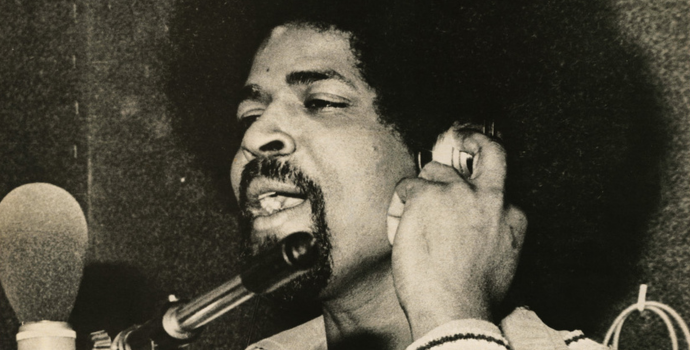
In the growing movement to rediscover Afro-diasporic music, some reissues transcend nostalgia. They do more than bring long-lost recordings back into circulation—they restore overlooked chapters of musical history, giving a voice once again to artists whose work never received the international recognition it deserved.
The latest release from Atangana Records, dedicated to Alex Dorothée, is one of those projects. With Kadence Kadence, the label continues its remarkable commitment to preserving and celebrating the musical heritage of Guadeloupe and the wider Caribbean. Over the years, Atangana has established itself as far more than a reissue label. Each release feels like an act of musical archaeology, carefully uncovering forgotten recordings, documenting their stories, and placing them back into the cultural conversation.
Although Alex Dorothée remains relatively unknown outside Guadeloupe, his music captures a pivotal moment in Caribbean musical history. During the late 1970s and early 1980s, the islands became fertile ground for creative exchange. Traditional Guadeloupean rhythms met Haitian cadence and compas, Cuban salsa, American funk and jazz, as well as the growing influence of African popular music. Recording studios became laboratories where musicians reshaped inherited traditions into something unmistakably contemporary.
Kadence Kadence perfectly embodies that spirit of musical openness. From the opening bars, a supple bass line lays down an irresistible pulse while the percussion creates a constant dialogue between tradition and innovation. The horn arrangements are elegant yet restrained, echoing both the great Caribbean orchestras of the era and the rich textures of Afro-funk emerging across West Africa. Nothing feels static; every element moves with purpose.
Even the title deserves attention. "Kadence," spelled with a K, is more than a stylistic choice. It reflects Creole spelling and affirms a cultural identity deeply rooted in the language and traditions of Guadeloupe. In a single word, the record asserts that this music speaks first and foremost in its own voice.
The B-side, Dimba Tine Raison, reveals another side of Dorothée's artistry. More reflective in tone, it allows the arrangements to breathe, highlighting melodic sophistication and lyrical depth. Like many great Caribbean recordings of the period, it demonstrates that dance music can also carry memory, reflection, and social meaning without sacrificing its infectious groove.
One of Atangana Records' greatest strengths is its refusal to frame these recordings as nostalgic curiosities. Instead, the label restores them to their rightful historical context, emphasizing their place within the broader story of Black Atlantic music. Long before globalization became a buzzword, musicians from Guadeloupe were already participating in a vibrant network of exchanges linking Africa, the Caribbean, Europe, and the Americas. Their music travelled across oceans, absorbing influences while creating entirely new musical languages.
Today, that legacy is experiencing a remarkable revival. DJs dig relentlessly for original Caribbean pressings. Producers sample forgotten grooves. Collectors search for records that disappeared decades ago. Yet beneath this renewed interest lies a deeper recognition: Caribbean music has never stopped shaping contemporary sound. Its rhythms continue to resonate through house, broken beat, hip-hop, Afrobeat, jazz, and electronic music around the world.
Reissuing Kadence Kadence is therefore more than an exercise in preservation. It is an invitation to hear these recordings as living works—music that still inspires dance floors, creative practice, and historical research alike. Each new pressing places these songs into the hands of listeners discovering them for the very first time, while reconnecting older generations with an essential part of their cultural heritage.
At a moment when global audiences are increasingly embracing the richness of African and Caribbean musical traditions, this release feels especially timely. Not because it follows a trend, but because it reminds us that some of the most innovative voices in popular music have remained unheard for far too long.
More than a reissue, Kadence Kadence invites us to rethink the history of Creole music—not as a peripheral curiosity, but as one of the most inventive and influential expressions of twentieth-century popular music. In bringing Alex Dorothée's work back into circulation, Atangana Records once again demonstrates that preserving musical heritage is not simply about looking backward. It is about ensuring that extraordinary music continues to find new audiences, new meanings, and new life.
In Same Category
- Raw urgency in the service of groove (Ex Banza & Janbat – Typo Positive EP)
- A Journey Through South African Jazz: Heavenly Sweetness' "Chakalaka" Compilation
- Music Legend Quincy Jones dies at 91.
- Nanga Boko Records release "Njitna! from Cameroonian singer Ometh
- Discover the album Habibi Funk 027: Ahmed Malek - Musique Originale De Films (Volume 2)
Related by Tags
- Alex Dorothée – Kadence Kadence: The Return of a Forgotten Creole Groove
- Raw urgency in the service of groove (Ex Banza & Janbat – Typo Positive EP)
- A Journey Through South African Jazz: Heavenly Sweetness' "Chakalaka" Compilation
- Music Legend Quincy Jones dies at 91.
- Nanga Boko Records release "Njitna! from Cameroonian singer Ometh